

In this episode of HR Disrupted, Lucy Adams is joined by Karen Moran to explore whether artificial intelligence can help leaders get better at the “people stuff” including giving feedback, recognising effort, and holding difficult conversations. Despite over $360 billion being spent annually on leadership development, most programmes fail to deliver meaningful change. Lucy and Karen ask: can AI offer a smarter, more practical solution?
We explore how AI can act as a real-time “pocket coach,” supporting leaders with small nudges and advice exactly when they need it. Rather than waiting for a scheduled training session, leaders can use AI to reflect on their leadership style, build micro-habits, or prepare for tricky conversations. We look at how AI is transforming hiring and onboarding by helping managers to write more inclusive job descriptions, generate interview questions, and create onboarding plans tailored to each new hire.
When it comes to recognising and engaging teams, AI can prompt leaders to show appreciation more often and in more meaningful ways. And prompts can also help with career development conversations, especially the tricky ones, such as when someone isn’t quite ready for a promotion.
Importantly, it doesn’t have to cost the earth. Free tools such as ChatGPT, Gemini, and Copilot can deliver a big impact. Simple prompts like “What are three ways I can improve team morale this week?” or “Write a thank-you message for a five-year work anniversary” can help managers act with more empathy and intention.
00:03 – Lucy Adams (Host)
Welcome to HR Disrupted with me, Lucy Adams. Each episode will explore innovative approaches for leaders and HR professionals and challenge the status quo with inspiring but practical people strategies. So if you’re looking for fresh ideas, tips and our take on the latest HR trends, subscribe wherever you get your podcasts. So getting leaders to excel at managing people has always been a challenge for HR. You know whether it’s giving feedback, recognising effort, having tough conversations, effort having tough conversations. These are the things that leaders often struggle with most, and leadership development’s just not working as well as we’d like. We’re spending over $360 billion globally and in most of us it’s just not hitting the mark for us, right? You know, about 70 percent of leadership programs don’t lead to any meaningful change. So today we’re looking at whether AI can help leaders be better at the people stuff, and with me to discuss this is the co-founder of Disruptive HR and our very own AI guru, Karen.
01:23 – Karen Moran (Host)
Moran.
01:24 – Lucy Adams (Host)
Hi, Karen, you are. We all go to you with our AI. You’ve been using this for a year two years now Since it came out.
01:35 – Karen Moran (Host)
As soon as ChatGPT came out, that was it. I was hooked.
01:40 – Lucy Adams (Host)
But I don’t think an.
01:41 – Karen Moran (Host)
AI guru would call me a guru, but I do my best.
01:46 – Lucy Adams (Host)
Yeah well, you’re definitely compared to the rest of us at Disruptive HR. You were definitely up there, and so it feels appropriate that I’m discussing this with you.
01:59 – Karen Moran (Host)
So, yes, today we’re going to have a look at some very practical, real world examples of how AI is helping transform leadership, what it can do to improve everyday leadership behaviors. How to get started if you’re in HR ideas so that anybody can use it to boost leadership effectiveness. So simple tools like ChatGPT, gemini, copilot because, of course, not all of us have access to budgets that you know where the more advanced AI tools are yeah and all right.
02:39 – Lucy Adams (Host)
Let’s kick off with a very basic question. Should we be getting leaders to think about using ai to help them lead better?
02:49 – Karen Moran (Host)
yeah, yeah, um, I feel like we should be asking maybe a different question, because we were always kind of going it’s coming soon, this is coming soon, but the horse, the horse has bolted, it’s already here and I kind of think that probably a lot of leaders are already using it. They might not be telling HR they’re using it, but I think many leaders already are. So I know that there’s yeah, it’s a good point.
03:16 – Lucy Adams (Host)
That’s a good point, that’s so. You think we should be asking a different question?
03:19 – Karen Moran (Host)
Yes, I do, because I think you know, we know from there’s been McKinsey research that two thirds of managers are already recommending AI tools to solve their business challenges. A third of them are using AI a few times a week not like me, every 10 minutes, you know and in top forming organizations, 35% are already using AI for helping leaders and that’s up from it was 23% a year ago. So you can already see that the world has moved on. So I think the question isn’t should we be using AI to support people leadership? It’s how do we in HR kind of get behind it, champion it and make sure that they’re using it in a good way?
04:08 – Lucy Adams (Host)
Yeah, no, it’s a really really good call, actually. All right, I’ll try another question. If you don’t like that one, let’s try the question why do we need AI to help leaders? Why haven’t traditional methods of developing them worked Well?
04:28 – Karen Moran (Host)
I think you know you and I can think about our own experiences in kind of in-house HR roles. You know we’re running lots and lots of workshops. Not a lot of things are changing as a result. We know our leaders are time poor. They’ve got their day job to focus on. And I think sometimes when we kind of rock up and say, oh, here’s a training course to go on in two months, you know that’s just not helpful. Um, so they need that kind of nudge. Uh, you know, it’s a bit like giving someone a map you know, handwritten map when they just need google maps to tell them in the moment turn left.
05:04 – Lucy Adams (Host)
You know, I was going somewhere with my husband recently, you know, and I was saying can you imagine if we didn’t have google maps? Ah, we’d have had the that great big kind of a2 map book. You know that you’d have to be trying to plot how you did that when you were driving. We just stopped a lot. I got, I guess.
05:23 – Karen Moran (Host)
I stopped a lot, yeah, because I’m not very good at reading maps, um anyway, but also I’m not very good at retaining information, so I’d stop and ask someone and they’d give me this. Oh, that’s the worst.
05:35 – Lucy Adams (Host)
And then it’s gone. You get back. That is the worst. You’d like wind that shows how old I am. You’d wind the window down, not press a button. You’d wind the window down and you’d say could you tell me how to get to? I don’t know the town hall.
05:49
And they’d say yeah, no problem, you turn left, turn right. I’d gone into a blank by then. I was just like no, I’d have to ask someone else, like two minutes down the road, to do the next bit, which is theges, and that’s what exactly. Yeah, and that’s what I can do. Right, it’s the small timely nudges in the flow of their work. It’s not another course or a toolkit. It’s support in the moment, a nudge, a suggestion, a way to make things simpler, quicker, more human simpler, quicker, more human, yeah, so.
06:29 – Karen Moran (Host)
So then let’s think about what are we really talking about when we say AI can actually help leaders?
06:32 – Lucy Adams (Host)
Well, I think one of the one of the kind of best entry points that we can look at is using AI for self-development, so why don’t we start with that? You know, AI can give you this kind of pocket coach concept. So Vodafone, for example they did have some traditional coaching, but they blended it with an AI companion called Amy. They always give it a human name, don’t they? So this one was called Amy. This kind of pocket coach for leaders, and leaders could check in with Amy between their traditional coaching sessions. They could ask for advice, they could explore ideas in real time and without having to wait for that scheduled call with their coach.
07:17 – Karen Moran (Host)
You know it’s when they needed it yeah, I think Chevron did that as well, but, but they had they called it Marty and it was more of a, it was like a building, those kind of micro habits. So it was nudges and it was it’s get. It was getting leaders to just perhaps reflect a bit on their self. You know, their style of leadership, their confidence, which we’ve been trying to do for so many years, haven’t we? And to actually build, you know, give something a try. And the results from that was that 96% of them said that they felt more resilient as a result of it. So not big sessions, those things. Sometimes we think it just feels a bit too light, but actually that’s what really helps.
08:01 – Lucy Adams (Host)
So all they’ve got the headspace for, isn’t it? You know, just that one small thing that they could try, and and of course you don’t need a major platform to do this we said we were going to give you some kind of DIY, and I think what we’ll do, karen, is we’ll put all of these DIY prompts into the show notes so people don’t have to be writing them down or whatever they can. They can access them there. But, you know, so you can use things like chat, gpt or copilot or whatever your preferred one is, and look at these leadership prompts like ask me five reflective questions to define my leadership purpose If that’s the thing that we’re looking at in terms of their development or suggest three ways I can learn in the flow of work without adding to my schedule. Help me shift from a kind of hands-on management micromanagement maybe a bit more command and control to a more coaching-led style, or even something like how can I get better at spotting what the mood of the team is like?
09:07 – Karen Moran (Host)
I love that. It’s just so simple, isn’t it? And I remember reading last week on there was someone on LinkedIn that talked about that she’d used ChatGPT to help her with creating personas of her exec team. So she was the she’s the chief people officer, and she sort of described each person, not using their names, obviously. They’re you know their quirks, what motivated them, what made them angry, um, and then she used it to kind of figure out how to approach them. So she might have been maybe resolving some conflict or trying to get buy-in for something, and it just helped her kind of tailor how she would approach it, which I just think is it’s just.
09:51 – Lucy Adams (Host)
It just blows my mind really, but I know I know you think ordinarily we’d have been having to go and read books on it, or you know trial and error or and I think that’s the key thing that you often talk to me about with you know, the diy approaches is, if you don’t like the first answer, or you don’t understand it, or you don’t think it’s you, you can train it, you know, and I think that’s where I misunderstood. I used to think it was like Google and it was that one and done and you got your answer and that was it, whereas actually you’re always saying to me try it again, give it more information, design the prompt, so you’re kind of giving it a role, so as my coach, you know, and and just being clearer with it. So where are we seeing ai have the biggest impact? We’ve talked a bit about that kind of self-development, but where, where do you think ai, with leaders, is having the biggest impact?
10:48 – Karen Moran (Host)
yeah, okay, I think probably hiring is probably the most obvious one, um, and a really quick win for for us in hr to get them using it for hiring. So if we think about you know, I can remember being in recruitment team and kind of asking managers for a job description, you know, and then like two weeks later you know I might get one um, and they just did it down out of the filing cabinet three years ago.
11:14
Yeah, yeah, and it looked exactly the same as it did three years ago and it would have a kind of you know, they must have a degree, they must be a team player. Uh, you know must be love fast-aced environments, must have had 20 years experience. And I think the good thing about AI is not only can it write better, you know, make it look more appealing, but it can challenge perhaps some of our kind of old school thinking. You know that kind tools like Textio or even you can use, you know, the chat GPT you know to say to challenge you on is this qualification really essential? Now, obviously, if they’re kind of a brain surgeon, you know there are going to be qualifications that are really essential. But how many times do we see jobs where we kind of go actually, is it really essential? Is this somewhere else?
12:08
Another way I can show that person has the right skills and experience to do this job, um, it also things like textio can kind of go this might, this phrasing, all these words might be putting off great candidates, um, and so it just helps them, you know, write a bit more inclusive job ads. It. It can also help them prep for interviews. So it could be kind of like help me think about interview questions, or help me think about a little assessment or a challenge that I could ask the candidate to do against the job, or summarise the feedback from the conversation that we just had. And of course then there’s on board. It kind of moves then into onboarding, doesn’t it? So now I know more about this person tailor me an onboarding plan. So just I think hiring and onboarding are probably the most obvious and the quickest wins just picking up on that point you made about the kind of inclusivity.
13:04 – Lucy Adams (Host)
There was one team that I was working with. I can’t remember whether it was textio they were using it might be, but they were using AI anyway to help them spot language in job specs that sounded a bit overly macho or just might be putting people off, and it gave it, gave them suggestions. It was really subtle, but once they changed it they saw many more women applying and actually the overall quality of the candidates went up as well.
13:31 – Karen Moran (Host)
Um, there’s some fantastic examples out there yeah, um and I know this um mcdonald’s used on border. So if any of you haven’t heard of on border, it’s, it’s one of those um suppliers that we’ve been following, haven’t we?
13:44
since back in the day when we first started, because they just had it.
13:49
They just had a more fresh, modern approach, and they’re Australian, I think, and they they’ve now, of course, got AI, which they didn’t have 10 years ago, but they’re using this kind of onboarding app where you can really personalize the experience so you can look at it by role, by, by region, by personality, and then of course it’s you know, we always talk about the fact that it should be personalized and it should also be employee owned and it tailors these nudges that go to the new person but also to the hiring manager as well, just something like that that makes something that, for us in HR, has always been such a struggle, hasn’t it to get managers and employees to kind of take more ownership of their kind, of their first few weeks, um and I know McDonald’s talked about early attrition dropped by 16% as a result of that but, um, I think you know, as great as OnBorder is, you don’t necessarily need a provider to do that, so you can kind of do a bit of it yourself.
14:55
So you could say, for example say, act as a recruitment advisor, help me write a gender neutral job ad, for I don’t know a data analyst, and what questions. Should I ask to assess collaboration in the interview, or could you draft me a quiz to help new hires share how they like to work so that I can personalize their onboarding? So things that would have taken that just managers would never have had the time to do before. It’s just so much easier.
15:25 – Lucy Adams (Host)
Yeah, brilliant. And I know, moving on, we can have a look at how leaders can be helped to engage with their teams a little bit better using AI. You know, we know, for example, that recognising their teams is often overlooked. You know, even when leaders mean well, they don’t always get that right. They don’t always do it enough. I think you know we were looking at that research a while ago, wasn’t it? Where they asked managers you know, how often do you recognize your team and they were like, oh, all the time. And then you ask the team members and they’re like hardly ever, you know. So, actually, kind of that, ai can help leaders show appreciation more consistently and in more personalized ways.
16:11
So there’s the. Kraft Heinz is a good example. They used AI, generated nudges aligned to their values, like work as a team or inspiring excellence through email or team reminding them to acknowledge someone’s great work or to check in after a project. And they looked at the results of this and they found that those leaders who engaged with the nudges because it’s always going to be those that don’t right, but you know, let’s not worry too much about them right now the ones who engaged with the nudges through AI were significantly more likely to be rated highly by their teams and the ones who ignored them that we just mentioned. They were twice as likely to be flagged as needing leadership support. So some great products out there.
17:00 – Karen Moran (Host)
Yeah, and again on that, there are the kind of DIY sort of prompts that you could use. I love things like this. It’s just so powerful. So if we think about our long service awards, if you have long service awards and we kind of roll out the kind of you know, well done on your five years, here’s a gift voucher or whatever. It just doesn’t feel special, and so a DIY prompt for a manager could be. This is a bit more about this person. Can you write me a personalized thank you message for them hitting their five-year anniversary? Just something, again, really, really powerful, and it could be. Suggest two simple nudges I can use to encourage more team feedback or draft me a quick Monday morning message to get my team motivated.
17:52 – Lucy Adams (Host)
So I’m going to use that one yep when I suddenly start being more motivational.
17:58 – Karen Moran (Host)
You’ll know what’s happened well, we get your um five minute Monday, don’t we on the club? Oh yeah, there you go there you go, yeah, so and I think you know also it can help with careers. So we know that, for example, pepsico, johnson Johnson, are all using kind of these like internal talent marketplaces and AI can now suggest things like stretch opportunities, internal gigs, spot maybe underused skills and even predicts, because of someone’s tenure, whether they might actually be ready for a move.
18:36
so I just think again, manually us trying to get that insight would take so long and then it would already be out of date and I think it helps surface it in real time and gives it to managers in real time. So I know pepsico have done things like if they can see what where people might have kind of hidden skills, and then it might pop up to the manager saying hey, you’ve got someone in your team with under using their analytical skills, here’s a project that could stretch them. So you know, it’s just fabulous, isn’t it?
19:10 – Lucy Adams (Host)
you can tell I get really excited I know, I know you love it, don’t you? But again, I think you know that diy approach that we use. We don’t have, you know, a big, a big product in our team do we use the diy version. But you know, hugely valuable and you know, in terms of that kind of career development, there are approaches that we can use.
19:31
So prompts like suggest three project ideas to help someone grow their stakeholder management skills, how can I talk to a team member about development when they’re not ready for promotion? You know that is something that we know leaders struggle with a lot and what they would normally do is avoid the conversation because they’re worried about opening up a conversation when the person isn’t ready. What could I say to encourage someone to think more broadly about their career options? And, of course, the prompts we’re giving you which, again, just to repeat, we’ll put them in the show notes, so you’ve got them there. You know these are generic ones, but you can then tailor it to roles and grades and level and tenure and personality, type and so on. Um, so just that kind of, you know, really fantastic questions that that we can put into chat, gpt and within seconds, just before that meeting with the individual, they’ve got some things to help them have that conversation yeah, that’s.
20:34 – Karen Moran (Host)
It’s just so useful. So we’ve obviously talked about how it can help them be better leaders, better coaches, improve team performance, improve morale, have better conversations, even the tricky ones higher and on board and so on. But let’s say, someone who’s listening to us today thinks right, ok, I want to give this a go. Where would you say they should start?
21:00 – Lucy Adams (Host)
Yeah, I mean there are four key factors that drive the adoption of a new technology and an apologies for the very unsnappily titled theory that I’m going to give you now. But there’s a model which is called the UTAUT model A bit of a mouthful. It stands for the Unified Theory of Acceptance and Use of Technology.
21:30 – Karen Moran (Host)
Oh, well done.
21:31 – Lucy Adams (Host)
Yeah, there we go, but what it’s basically saying is there’s four reasons which will encourage someone to take this up. So we’re wanting leaders to engage with AI because we think it can help them do things better. How are we going to get them to use it? And, notwithstanding the stats that you started with, karen, there are clearly large numbers of leaders who aren’t using it, as well as the ones who are increasingly use it. Four key factors, then.
21:58
So first one is what they call, in this model, performance expectancy, which is basically will it help me do my job better? So we need to be helping them understand that it will help them do their job better. This prompt helps you write a recognition message in 30 seconds. That’s the kind of thing we need to be conveying. Second factor is effort expectancy. Other words, is it easy to use? You know they don’t need to be going on a training program, so it needs to be where they are. So do they use Slack? Is it on Teams? You know where is it. Where are these prompts? Where are?
22:40
If it’s a product, then how integrated is it into the things that they use every day? Is it going to be tricky to learn? Is it intuitive If we’re having to send them on a training program or give them a little video about how to use it. Forget it. It’s got to be so intuitive.
22:57
The third factor social influence. So are the people I work with or the people I respect, are they using it? So, have we got role models? Have we got influencers using it? Are we sharing examples from their peers about how Scott in accounts used it to have a better conversation with that difficult employee? And then the final one, which again sounds a lot of buzzwords but facilitating conditions, which is things like do I have what I need? To give it a go? So do I understand the conditions of use around it? Like you know, don’t use real names or confidential data. Have I got a simple one pager that just shares with me how we in our organization are using it? But I think you know, notwithstanding that, I think, quite helpful model, you know, know which is that kind of? Will it help me do my job better? Is it easy to use? Are the people I like and admire using it too? And do I have what I need to try it? We’ve got those conditions then. Then that’s great. But keep it light. Make it okay to experiment. I love you.
24:11
Some companies are encouraging leaders and employees to share their favourite prompts. They call it. They call them prompt-a-thons, which I just think is just so good. I know you would love a prompt-a-thon, wouldn’t you? But you know it’s about share those aha moments. I used it for this and it helped me do X, y and Z. So giving people prompts to use helpful prompts, and we’ve done this with our Disruptive HR Club members, haven’t we? You know, we gave them a leader prompt sheet and they loved it.
24:48 – Karen Moran (Host)
Yeah, they do, because I think that’s the secret. The secret is in the prompts and I think if our leaders don’t know what to ask, they’re not going to use it. But if they get something great back because you’ve given them a really good prompt, I think they’re going to be hooked.
25:04
So, it could be. You know, help me prep for a conversation with someone who wants a promotion who isn’t quite there yet, with someone who wants a promotion who isn’t quite there yet. If that’s going to really make a difference to that relationship that they’ve got with that person, they’re going to be thinking oh there’s so many ways that I could be using this.
25:23 – Lucy Adams (Host)
So, yes, so let me just pause here. And we just mentioned the club, the Disruptive HR Club. Just give you a little bit more information on it. So we’ve got members all over the world, hr professionals who want to do things a bit differently. Thousands of them, thousands of people like you if you’re listening to this podcast.
25:42
With membership of the club, you get weekly live training sessions with Karen and I. You’ve got on demand training programs and tons of useful toolkits to help you make the changes in your organization. If you want to find out more, just head to our website at disruptivehrcom and there’s more information in the show notes. So what’s the one thing you could do this week and I think the good news is is that you know we don’t have to overhaul our entire leadership program. Right, you know, let’s pick one pain point that leaders are often struggling with or are struggling with maybe giving feedback, maybe onboarding, whatever it might be and just show them how AI could help with that one pain point. Share a simple prompt, let them try it out and, kind of you know, build their confidence through these small wins. Yeah.
26:46 – Karen Moran (Host)
I think we could also look at external vendors the people that know this stuff so well, and maybe get them in to help you or show you what their tools can do. Always make sure that they integrate with what you’re using already. So if you’re using slack or ms teams, make sure that it’s it. They can integrate, which most of them will be able to do now. But, um, whether you decide to go high tech or keep it diy, the key is just to start something. Just something.
27:16 – Lucy Adams (Host)
yeah, exactly, get going and always pilot it. You know, it doesn’t have to be a mass rollout across the whole organization and an instruction or a man mandatory training programs to use ai. You know, try it with a few more open-minded leaders. Chances are they’ll be using it anyway, but they might not know that they could use it for people leadership. It’s about learning and adapting and sharing what works. Okay, so that is it for this episode. Hopefully we’ve convinced you that AI isn’t just for data scientists or tech teams. It’s here to support better leadership as well. It can help your managers be more thoughtful, responsive and human, with just a little bit of help from a machine. Okay, so thank you so much for listening. Thanks, Karen, pleasure, lucy, and see you next time. Bye.

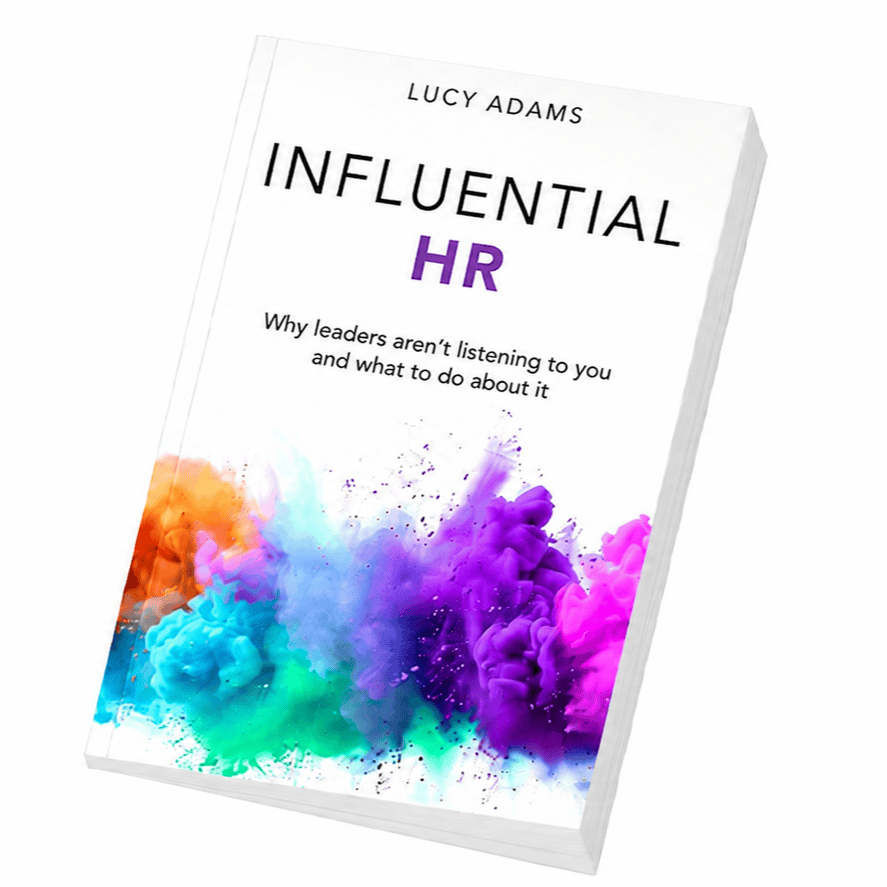
The third book in Lucy Adams’ series for forward-thinking HR professionals explores why HR struggles to influence leaders — and how to build the confidence, credibility and authority to create real change.


