

In 2009 Netflix caused a huge stir in the HR and tech worlds with their 125 page slide deck that set out a new way of leading people. Whilst many companies have now adopted their concepts such as ‘freedom with accountability’, the rejection of the idea that businesses are a family, and the so-called Keeper Test, Netflix were the first major corporation to introduce them. In this episode, Kenny Temowo, a senior member of the Leadership Culture & Talent Development team at Netflix, describes the on-going impact of these pioneering principles.
Kenny describes the role of creativity within organizational culture and the importance of an environment that encourages risk-taking and playfulness. We look at how to combine alignment with company-wide approaches with meeting the needs of local teams. And we explore Netflix’s distinctive leadership seminars, which foster leadership excellence through engaging stories, poetry, and articles. This approach encourages leaders to navigate real-world challenges without traditional learning objectives, creating an immersive experience that empowers leaders to find solutions collectively.
As an added bonus, we discuss our shared love for British Blue Shorthair cats! Whether you’re an HR enthusiast, a leader, or a cat lover, this episode has something for everyone!
Chapters
(00:03) – Innovative HR Strategies at Netflix
(13:50) – Fostering Creativity in Organizational Culture
(26:55) – Leadership Seminars and Peer Learning
(39:03) – Feline Friends
Kenny Temowo
00:03 – Lucy Adams (Host)
Welcome to HR Disrupted with me, lucy Adams. Each episode will explore innovative approaches for leaders and HR professionals and challenge the status quo with inspiring but practical people strategies. So if you’re looking for fresh ideas, tips and our take on the latest HR trends, subscribe wherever you get your podcasts. So in 2009, netflix caused a huge stir in the HR and the tech worlds with this 125 page slide deck that they put out there, which set out a kind of new way of leading people. And you know, whilst many companies have now probably adopted these concepts of things like freedom with accountability, you know, the rejection of the idea that we are their family it’s like they clearly said we’re not their family, we are their family. It’s like they clearly said we’re not their family. Or the so-called keeper test that leaders are asked to or were encouraged in as part of this slide deck, were encouraged to undertake.
01:14
Whilst there are many companies that are doing these techniques and tactics now, I think Netflix was definitely the first kind of major corporation to introduce these and I’ve always had a huge amount of respect for Netflix for these approaches. So I had real trepidation when I actually visited their London offices recently and I met up with Kenny Tomoa, who is a senior member of the leadership, culture and talent development team, and I was equally delighted to hear that it’s not actually all corporate PR, but these principles do indeed underpin Netflix approach to leading people, so I am really thrilled to have Kenny here with me on this week’s episode. Big welcome, kenny.
02:03 – Kenny Temowo (Guest)
Thank you, Lucy. Thanks for having me Absolute pleasure to be on this week’s episode. Big welcome, Kenny. Thank you, Lucy. Thanks for having me Absolute pleasure to be on this podcast.
02:10 – Lucy Adams (Host)
Right, let’s get into it then. So that slide deck from 2009, and I know it’s been updated and it’s evolved, hasn’t it? But those kind of core principles has that been your experience as an employee of Netflix?
02:28 – Kenny Temowo (Guest)
Yeah, I would say I’d say broadly. So, you know it’s, it’s interesting because we’re at a time and a company where we’ve been growing massively. You know, during COVID we saw quite a lot of growth. We saw quite a lot of growth, um, I would say probably half half the company, I would say um at the time, had joined around the covid period. So, um, and we’ve since then, we’ve.
02:54 – Lucy Adams (Host)
That’s huge, isn’t it?
02:56 – Kenny Temowo (Guest)
yeah, it’s a, it’s a massive, it’s a massive amount. Um, and particularly, you know, when you’ve got that number of people joining remotely, virtually not being able to be in person, that that adds an additional challenge as well. Um, and we’ve moved into ads. We didn’t, we said we wouldn’t do ads before, but, as is known publicly, we’ve now started ads, we’ve moved into games, and so I say all of that to say we’re, we’re in a time now that’s quite different from 20 years ago, and so, in answer to your question, I’d say that it’s broadly true, but there are some things that are now changing. There are some things that are now needing to flex as the company scales, which I think is quite an interesting time.
03:37 – Lucy Adams (Host)
Well, maybe we can get into that later, but I want to find out more about you and your role at Netflix. So talk to me about your journey in leadership, development and culture and OD, and how you came to be at Netflix yeah, so happy to Lucy.
03:54 – Kenny Temowo (Guest)
So, yeah, my trajectory is an interesting one, I think, because I started out in the creative arts, so I was a session musician years ago. Now this is 20 years. What did you play? I was a vocalist. I sang. I played guitar, played piano as well. Uh, mostly, mostly for the gigs and the work I did, I ended up singing. So my claim to fame at the time was, um, doing sort of session session vocals for Westlife, um, leon Lewis, oh, wow, I had no idea.
04:24
That’s really cool so I grew up yeah, I grew up in a really creative environment. Um, my brother was the uh music director for amy winehouse. Um, who, most people amazing, yeah, uh friends who are doing sort of vocal, uh vocal tours with george michael will young. I don’t know what will young’s doing these days, but he used to be a household household name. Yeah, never heard of him now.
04:50 – Lucy Adams (Host)
Um so, but yeah, so so to answer if you’re listening, will not, I’m sure you’re not listening to this, but will if you’re listening. I’m really sorry we just dished you. You’re probably doing massive amounts, yeah.
05:01 – Kenny Temowo (Guest)
So anyways, I instructed big creative industries person yeah, no, no, exactly, and plus plus one to that on will. So, yeah, and, and I started out and and essentially after that I found that you know, the the industry was a tough one, right, it’s a tough one to last um in the in the sort of music industry, in that sort of world. So I went into teaching. I taught for quite a while. Um taught music, creative arts, drama, um in a sixth form college and um, they were sort of 16 to 19, but they look like they should have been in full-time jobs because they’re all so big. I think when I think about um that is a tough.
05:42 – Lucy Adams (Host)
It’s a tough age group. I taught in sixth form college when I first left uni I think I was about 26, yeah, and um, I mean, it really stands you in good stead of standing in front of difficult leadership audiences, doesn’t it? Um? I remember going to the front of the class and I went to drink a cup of coffee and my hand was shaking so much I had to kind of put the cup back down again, you know, and I was absolutely terrified. But you have, you know, it is a good training, isn’t it that kind of ability to hold their attention and definitely stood me in good stead no, you’re absolutely right, and I think that’s um, that’s probably where I got my sort of confidence when it came to public speaking.
06:24 – Kenny Temowo (Guest)
I’m sure, sure the same as with you. You know, you’re just so used to standing up and speaking in front of people. Were you teaching in London out of interest? Was that whereabouts?
06:33 – Lucy Adams (Host)
No, it was actually up in Yorkshire. I was living up there at the time and I did oh. I mean, you know, I was a kind of like a supply teacher, but a part timetime so they would just give me whatever anybody else didn’t want to do. So my main thing was history in English, but I also got um electrical installation engineers, year one, communication skills wow, oh god, that was the worst session of the week. That was just terrifying.
07:03 – Kenny Temowo (Guest)
Oh, hats off to you, yeah, and you know I take my hats off to anybody that’s still teaching right now, because it’s even tougher, I think, in today’s, today’s age. Um, so, yeah, so I did that for a number of years and then I won’t go through the entire history, but then I took a number of different roles in in leadership, in culture, I think. When I think about my career, it’s, I’ve worked in probably most of the sort of services and sectors you can work in. So I was in social enterprise, I was in a consulting firm where I’d worked with sort of Rolls Royce, bbc or BBC Studios, I should say Johnson Johnson, vodafone. So that was a really helpful gig in just being able to sample and understand how different organizations work and different sectors work.
07:50
Then went to a gaming metaverse type organization in a sort of global talent and inclusion role, and then, yeah, full Circle landed at Netflix a few years ago and I have a regional role as part of a global team. I think that’s quite an important distinction because, um, this is netflix was my first time being in a regional role. Previously it’d been at the center or in sort of kind of a more global role so tell me about the role that you’re doing now then.
08:20 – Lucy Adams (Host)
So it’s to do with leadership, talent management, culture. So you’re when you look at your linkedin description, it’s to do with leadership, talent management, culture. So when you look at your LinkedIn description, it doesn’t say I am a head of this, or it just talks about these elements. But if you were to kind of summarize your responsibilities, what would they be?
08:40 – Kenny Temowo (Guest)
Yeah, a big part of it is leadership. So leadership and culture. We, you know our headquarters is in LA and ultimately the strategy is determined and defined out of LA, and so part of my role is, for the UK and for Northern Europe in particular, I’m essentially the head of talent management culture for those regions, excuse me so anything north of Europe related to our biggest markets, the UK and Amsterdam I essentially lead on everything to do onboarding, culture, engagement, talent management. It’s quite a wide and kind of broad church. But we, we work closely with our business partners and we have a central, centralized sort of nation function out of Amsterdam, and so I travel back and forth between Amsterdam and London. A lot of my work is either, you know, delivering, facilitating or internal consulting with our business partners and our senior leaders, and we can talk about a few, I guess, of the different kind of flagship programs. But I’d say, just like anybody in our worlds, you know, there’s a fair bit of facilitation and there’s a fair bit of consulting internally that I end up doing.
09:55 – Lucy Adams (Host)
And how much autonomy do you have versus the parent company in LA? Yeah, it’s a balance you have a certain amount, I’d say.
10:09 – Kenny Temowo (Guest)
We used to talk a lot about highly aligned and loosely coupled, which was one of our culture terms, and it’s just what does it mean? It’s probably the first thing people are thinking Highly aligned, loosely coupled it sounds nice, sounds posh, but what does that actually mean? Sounds nice, sounds posh, but what does that actually mean? Yeah, it’s a kind of a guardrail, to sort of say hey look, here are some key things we need to be aligned on, some sort of non-negotiables, and here’s an area where we can be loosely coupled. We can sort of you’ve got some freedom to play in. So one of the things that was great a few years ago when I joined is that I was able to pilot some things that haven’t been done anywhere in netflix we had. We just said, look, said to the, to the global team, to the central team hey look, let’s test some things in emir, in europe, middle east and africa, let’s see how they land um and then hopefully, with that, can percolate upwards um and provide some good data points for the global team with regards to kind of more broader um, I think that’s really sensible.
11:08 – Lucy Adams (Host)
You know, quite often I’ll hear from people in HRD roles who are perhaps working in a regional division or a subset of the parent company and they feel sometimes that the parent company is too controlling, that they don’t have enough autonomy, and I’ve always suggested that you know, a great way of getting that autonomy is to offer to be that guinea pig, to offer to be the pilot.
11:36
I know when I was at the BBC, we would often pilot things away from the mothership, from the kind of the London caucus, where there was a lot of media attention, a lot of scrutiny, a lot of noise, whereas if you went to perhaps one of the regions, so, for example, we piloted something around, take as much annual leave as you want, and we piloted that in Bristol. So for listeners outside the UK, it’s an area in the southwest of the UK and it was just, it was smaller, I’m perfectly honest you didn’t have the media scrutiny like you did in London, so you could actually, you know, test and learn, you could try some stuff out, and it was just helpful to have that ability to pilot and test in smaller, safer, less noisy areas. So I think sometimes if people are listening to this and they’re thinking oh, I wish we had more autonomy. I think, putting yourself forward as a guinea pig, as a pilot area, it can be a real value to the parent, can’t it?
12:43 – Kenny Temowo (Guest)
Yeah, absolutely I think so. Yeah, absolutely I think so. And, and you know, part of the tension is when you’re in, when you’re in a smaller, when you’re in a region, or you’re not in the hq, as you say, not in the mothership you can go a lot faster, um, and yeah, there’s always a, there’s always a desire to go really, really fast, but then you know you’ve got to take other people on the journey with you. So I think that’s the other lesson as well.
13:07
If people listening, if you’re in that sort of global organization but you’re not at the center, part of it is how do you take your stakeholders, how do you take your colleagues, the folk in HQ, how do you help them understand the data that you’re using to determine what you’re piloting, what you’re testing, so that they have confidence, so that also they can speak to their own stakeholders to say, hey look, the UK, europe, are doing X, y and Z. Here’s why they’re doing it, here’s what we want to learn from it. So I think that’s one of the things I’ve taken a lot from in this role is just the power of real collaboration globally, from in this role is just the power of real collaboration globally even where you want to move quite fast.
13:50 – Lucy Adams (Host)
Yeah, and I think that’s a really important point, that if you are trying to pilot something locally, being upfront and getting agreement with the parent company around, what’s the hypothesis that you’re testing? What would a successful pilot look like as opposed to a mediocre, as opposed to a failed one? Because I think sometimes we just say, oh, I’m piloting this, I’m testing this out, but we’re not clear on what’s the benchmark or what are the parameters for success and failure, and getting by into that early, yeah, yeah, and it might help to have some kind of categorization of the work you’re doing in the following buckets, which is, you know, what is truly global, which is universal for everybody.
14:32 – Kenny Temowo (Guest)
That may be something like onboarding, for example. What is um, customizable or or sort of, can be, you know, uh, tweaked to make to have a best fit for that particular location. And then what is very bespoke, so it’s more white glove. It may not exist in other areas, but there’s a specific reason, maybe because of the market, maybe because of demographic makeup or the functions that exist there that might not exist elsewhere, like engineering, for example. I think that sort of customization want of a better word, customizable and kind of completely bespoke, might help as well with some of the decision making that local teams do.
15:15 – Lucy Adams (Host)
Yeah, yeah, I agree, let’s change the focus a little bit. And you know you work in a creative company. I’ve worked at the BBC company, I’ve worked at the BBC, so we share that. You know we have that joy and burden in common. You know the highs and lows of working in a creative organisation. So clearly, I know I’ve got my own thoughts on this, but I really want to hear from you about you know this creating a climate for creativity and what are. Are there things that you can do at an organizational level, or is it just about the right people? Do you believe that there are things you can do at an organizational level that are are will are more conducive to producing greater levels of creativity?
16:06 – Kenny Temowo (Guest)
oh, such a, such a good question. I love it and I can’t wait to hear your thoughts on this as well. I, when I was doing my postgraduate, I remember doing a um, a master’s paper around creativity. Um, I haven’t read it in a in a long time. I probably will disagree with a lot of what I wrote back then. Um, but I do remember a quote, someone saying something, a definition of something.
16:30
Like you know, creativity is messing around until something happens, and there’s this idea of play which is at the heart of it, and I think part of what is challenging in corporations, in businesses, is that they’re not inherently playful necessarily, or people don’t necessarily feel there’s. You know, there’s a lot of talk around psychological safety and things like that, of course, right, and so people don’t always feel inherently safe, uh, and free to be able to be a bit playful, in other words, to take risks. So, yes, I think one of the things that is important, right, is the ability for people to lean into risk and how much of that is encouraged in the broader culture. So, at netflix, um, I think what helps is that, um, you know, we started off with a, with this idea of freedom and responsibility which, again, as we’ve scaled, we, we sort of emphasize more the responsibility now over the freedom, because, of course, if you’re 15 000 people and everybody is just leaning completely into freedom, uh, with no responsibility, it’s a little bit yeah, um, and so we talked, we’ve talked, a lot about freedom, responsibilities. I think that’s so. So if there are, you know, if, if there are, if there’s a North Star in the wider culture that is reinforced by the leaders, I think I give people permission to be a bit more playful, to try to test their ideas, to know that they’re empowered to try something and if it fails, you know they can look back and learn from it, know, they can look back and learn from it. Uh, I once had a ceo say look, um, I’d be more angry if you, if you just didn’t try anything at all, as opposed to you know you tried something, it failed, and you sort of, and you learn from it. I think there’s something in the sort of almost the air and the sort of broader culture.
18:19
And then and then my second point, but lots of thoughts, but I’ll just end on this one, because I’d love to hear yours, yours as well is, you know, there’s, there’s a reason why, when I look back at and you know I started out in a creative industry as a performing musician and and as I’ve worked my way up in different corporations, you know you always notice that there is a pairing of a creative lead and a sort of an MD, a managing director type lead, or there’s a pairing of a producer, an exec producer in the games and TV world, and a sort of creative lead, and sometimes those roles kind of blur. But I think that’s really key and I think what that says is that you know you always need a peer consultant. We used to talk about this idea of a diamond and someone who would focus on opening up the diamond, which is that sort of thinking about the different ideas or leaning into risk, and someone that would be focused on closing the diamond. You know that just making a decision, landing on something or being a bit more concrete about where to go next, being a bit more concrete about where to go next, and I think that part of for innovation and creatives teams to do well, it needs the right mix of personalities and roles, and so you always need people in the team who are going to be great around saying, hey look, this is how much budget we’ve got.
19:44
This is our roadmap, these are our timelines, this is what the logistics are like, and then other people who are focused on here. Here’s the vision, here’s a bit of courage. We need a bit of courage to lean into. You know, trying out Baby Reindeer, that you know who would have thought that that would have been successful? Or you know, a squid game or whatever the case might be. So there’s that balance, I think, in a healthy team, what we would call a dream team between kind of creative risk and a focus on and I guess, a focus more on what you might call the operational sort of side of it.
20:23 – Lucy Adams (Host)
Yeah, I mean, I absolutely agree with everything you’ve said about the playfulness, the psychological safety all of which can be very difficult for organizations that are having to meet targets and investor expectations, and the relentlessness of perform, perform, perform and those expectations, expectations. But I also think that there’s something about a creative environment where we tend to think of it as being all the chuck everything up in the air, your open diamond. You know that kind of you know it’s all about brainstorming and it’s all about, just kind of you know, experimentation and and yet I, you know, one of the things that really stood out to me was when I went to see Ricky Gervais talk about the comedy process and you kind of think that it’s a genius sitting there having ideas, don’t you? And that kind of sparking off each other with a team of writers, and. But he said that the biggest contribution to a great comedy is the edit and it is the reduction, it is the stripping back, it’s not adding, it’s not the big ideas, it’s the discipline of reducing.
21:40
And I know that, you know, when you see a news broadcast go out for every amazing foreign correspondent there in the thick of it there are a team of highly specialized technical, as you say, you know, producers, editors, people who contribute to that creativity but aren’t necessarily seen as the creative ones, and so I think you’re absolutely right to point out that blend and and actually too much freedom, I think can be damaging to the creative process. You know, you think about some of the the best kind of innovations that have happened in media. Has it been with the biggest budget, not necessarily. Actually, sometimes that those kind of tight constraints around budgets and time frames and limitations that are set on on creatives actually can drive a greater creativity.
22:35
So I think it is always a balance between the structure, the limitations, the boundaries, the responsibility piece with the freedom, and I think I love it when I see leaders leading in a way which is I don’t know if you’ve come across the Telenor approach tight, loose, tight, so it’s, so it’s. It’s about being really tight on expectation what are the outcomes we’re looking for from you, what is the output we want? What does success look like? And then the loose bit is all about then, kind of taking a step back and giving that autonomy, that freedom for people to come at it in different ways and, you know, with different ideas, challenging established ways of doing things. But then it’s a tightening up again on accountability, deliverability. So it’s not anarchy, it’s not a hippie commune, it is about still delivering, but there’s space in there and it’s it’s quite structured in the way that they give that space yeah, um, there’s so many, so many things.
23:42 – Kenny Temowo (Guest)
I just want to just piggyback on in what you’ve said, lucy, um, if I can, because I think that’s that’s so good, you know, first of all, you’re right. I think creativityback on in what you’ve said, lucy, um, if I can, because I think that’s that’s so good, you know, first of all, you’re right. I think creativity is a, is what you might call a boundary phenomenon, in that it’s something that comes as a result of restriction. You know there’s that phrase. You know necessity is the mother of invention. Right, is another one. You know, because you’ve got these great, these sort constraints, whether those be budgetary constraints or time constraints, we all know how to come up with ideas or come up with solutions where we’ve got constraints. So I think that’s sort of one of the first things I’ll say. And then the other thing is you know, I think there’s a difference between creativity and the creative process.
24:23
I think about the creative process. Usually, what’s key there, whether that’s in theatre, music, whether that’s in TV or games and the sort of industries that I’ve worked in, usually it’s critical that you have someone that is holding the vision, someone that is able to say, hey, look your point. This is where we’re going, but this is what I see, and there’s a little bit of, you know, a kind of a genius there, potentially, or at least someone who’s able to dream, someone who’s got the sort of who’s curious, who’s really, really curious about the world around them. So they’ve got these ideas. But as part of that creative process, as we said, you need a whole range of folk to bring that to life, and so I do think it’s right that we reinforce that.
25:07
Even if you, as an individual, you’re not somebody who is coming up with the idea, you can still be integral to that creative process in terms of how you land it. So in the world of TV and film, that would be everyone from your production set assistants or your people who are managing budgets and schedules, to your business affairs people who are ensuring that the contracts are right, that everybody has to really capture and get a sense of that creative vision for whatever the show is and I think it’s true in the talent and HR world. I think in L&D, there’s a lot of ideas, a lot of innovation as often there, but I think that we often don’t think of ourselves as creative because we’re perhaps not always coming up with the ideas originally, but I think there are lots of different ways that we can all be quite creative and innovative in the work we do. It starts with playfulness and an ability to lean into a bit of risk.
26:05 – Lucy Adams (Host)
Well, that brings us really nicely to the work that you’re doing at Netflix and the way in which you’re addressing leadership development, and I know when we met you talked about the fact that you do it quite differently at Netflix, without kind of giving away too much kind of commercial intellectual property here. Can you talk to us about how you work with leaders at Netflix to help them kind of get better at what they do, whether that be creative leadership or business leadership, you know. So how do you help leaders, what sort of formats that it takes with you at Netflix?
26:46 – Kenny Temowo (Guest)
Yeah, no, that’s really good. So, excuse me, so, and you’re quite right to describe it as how do we get better at what we do? We talk about excellence at Netflix, and I think it’s quite an apt word, I guess, to use, because, ultimately, if you’re hiring people that are really really good and Netflix has the fortune of being able to hire people who are really experienced and great at what they do um, you want to still challenge them, and usually they come with a desire to be even better and to have this sort of spirit of excellence. So, um, it is indeed about how we help people get better, and one of the things I guess I can speak to is we have what we call these leadership seminars, and they are beloved seminars and they’re, you know, if your audience is familiar with an organization called the Aspen Institute, then you might be, you might have a sense of what, what this, what this is like. So, but long story short, we we have these seminars, which are global for our sort of, our senior leaders, and they’re, you know’re essentially based on stories. They’re based on Netflix, curated stories. We have sort of journalists, ex-journalists, who write these based on the events that have happened throughout all of Netflix’s existence, mixed in with things like poems, mixed in with articles and some of the reading.
28:13
I’ve never been at a company where I’ve seen leaders do as much pre-reading before. I kid you not, I mean so many. There’s, of course, a bunch of folk who don’t always do the reading, but a good amount will do the reading and to sort of help your, your listeners, visualize it. Just imagine you’re at a retreat somewhere for a few days, three to five days in a circle. You take your phones, you put your phones inside um, lock your phones away.
28:40
So we have no phones, no screens, um and uh, and you’re immersed, uh in through what we call, or we don’t call it this, but it’s called Socratic dialogue, and Socratic dialogue is just a sort of fancy phrase for you know, open-ended questions in with the intent of creating a high quality conversation. So it’s not so much coaching, it’s not so much facilitation, it’s what we call moderation, um, and it’s really deepening people in the text, in the stories, as a way of um, uh, sort of cascading the culture, as a way of cascading the kind of law of netflix, if you like. And people typically leave um with a higher sense of advocacy for the business both internally and externally, because you feel more bought into what the mission is of the company. So it’s very much. We have a number of different seminars, some of it around more sort of business metrics, commercial sort of direction and other bits around our purpose and culture and values.
29:47 – Lucy Adams (Host)
So those are one of the sort of what I call vehicles that we use and we mixed in between that I think that’s great, you know, I think that kind of ability to engage with a story, of which there’s, like any story, there are always multiple potential endings and multiple potential morals to draw from that story, and and of course that’s what leadership is like, isn’t it? There is very rarely one clear-cut, obviously right answer. There is usually a whole hot mess of possible half right, half wrong answers. And, as a leader, you it’s about making choices with that level of ambiguity and lack of certainty, and and I think that you know that businesses that that try and train leaders in the right thing to do or, um, the you know the correct way of handling something, misses that point that most leaders are confronted daily with the grey, with the confusion, and they’re having to navigate that. So I think, using these scenarios, this peer-to-peer learning, I think is absolutely essential, particularly in the world that we live in now.
31:09 – Kenny Temowo (Guest)
Yeah, absolutely no, I agree, I agree.
31:13 – Lucy Adams (Host)
And so leaders that come along to these seminars, do you ever get any pushback in kind of well, what’s the curriculum and what am I being taught? Or do they kind of get it and they turn up and they know they understand?
31:27 – Kenny Temowo (Guest)
Yeah, that’s a good question. No, I’ve never heard that sort of pushback. Maybe it’s been shared at one point in the past. But you know, lucy, most of the leaders that I end up spending time with or bumping into in the corridors or in the stairwells, bumping up, bumping into in the corridors or in the stairwells they’re just often surprised at how much, how engaged and how enriched they sort of leave these seminars. So, yeah, we don’t have kind of traditional learning objectives in the sense that you know you might think of, because, as a moderator, what we believe is that the answers are in the room actually, and so if you’re determining the answers beforehand, then you’ve sort of you’ve kind of missed the whole point.
32:18
But the idea is, how do we find the answers in the room to some of the real niggly challenges? You know it’s quite public knowledge out there that you know everyone is saying Netflix has won the streaming wars, but then you’ve got the likes of YouTube that are, you know, clipping on the heels of all the streamers with how well they’re doing. So you know some of the debates involve, well, what is the, what is the competitive landscape and how, how Netflix kind of move into, you know, 2025 and beyond, 2028 and beyond. So I think it’s a.
32:54
It’s a and I’m biased in saying this I think it’s a great way of really challenging um and helping leaders um really wrestle with big organizational kind of conundrums and dilemmas. It is a people who are listening, who are sort of maybe thinking about oh, is this something we should be bringing into our organization? I would say what it doesn’t do it it who are sort of maybe thinking about oh, is this something we should be bringing into our organization? I would say what it doesn’t do. It’s not a sort of skills practice space as such. It’s not an explicit skills practice. We have other spaces where we use actors as a way of practicing things like feedback, for example, which I know a lot of companies will do, and because feedback is such a big part of our culture we’ll often bring in actors as a way of creating that safe space to fail and to try different approaches to it.
33:38 – Lucy Adams (Host)
But that peer-to-peer learning is quite a big platform for you, isn’t it, in terms of your approach to developing leaders. I think you have sort of small peer-to-peer learning groups, don’t you?
33:51 – Kenny Temowo (Guest)
Yeah, we do actually’s um, it’s interesting. So, yeah, when I joined um, I piloted in in the region. Um, this sort of peer-to-peer approach which the idea was to, you know, use our leaders who have been part of coaching programs in the past as facilitators, so to give them some um, some basic resources and skills they need to facilitate a group of about six to eight senior managers and managers who would all bring their individual challenges and the leader would sort of work through those challenges. The whole group would work through the challenges. We started that a couple of years ago and I’ve had directors and leaders saying to me Kenny, this is the best thing I’ve been part of at Netflix and we piloted it. We talked about pilots.
34:38
We started that in EMEA and then we’ve had some folk in other parts of the business outside of EMEA really want to take up and start piloting, and so we’ve now started piloting in different regions and it’s very simple, you know, it doesn’t cost a dime or it doesn’t cost a penny, depending on which part of the world you’re from.
35:02
And also it just requires that you’ve identified a handful of champions, of role models, of leaders who have the sort of sensibilities to sort of hold a space with a small group, and of course there’s a of sensibilities to sort of hold a space with a small group and of course there’s a bit of input in terms of supporting them along the way, matching the groups and things like that. But I kid you not, it’s what, what, what they? I think what they’re grateful for is that they’re not having to get sort of content dumped on them, things that they could get or things they can get from Google, and maybe the most memorable quote is quite simple. Someone who said to me, kenny, I no longer feel lonely at Netflix was their phrase. Yeah, because you can very easily be in silos, and so I think the other benefit to this is people coming together in cross-functional groups and they’re getting to understand what the challenges are of other leaders, and so, yeah, I would recommend it to any organization.
36:00 – Lucy Adams (Host)
They’re also hearing, aren’t they from each other around the fact that that they’re not. They’re not the only ones experiencing these issues and you know, every leader I’ve ever met has some level of imposter syndrome that are they up to it? Uh, are they the only ones who are experiencing this, um, the worries and fears that they have? So I think that peer-to-peer learning is is fantastic. It’s not just the networking piece, is it? It’s also recognizing that they’re not on their own yeah, exactly this.
36:29 – Kenny Temowo (Guest)
This is quite right, and it’s often surprising when you do the sort of surveys and the questionnaires and interviews to understand what benefits people derive from these different opportunities. And often it’s that it’s often it’s the knowledge that they aren’t on their own and it’s a way of sort of, we all have a bit of imposter syndrome to some extent, and I think it can be a way of reducing that, because other leaders are wrestling with the same kinds of challenges, be that challenges such as how do I give upwards feedback? How do I manage between this region and the mothership? How do I have difficult conversations?
37:11
You talked at the top of this about things like our keeper test, which is this idea that you know any employee can ask their leader or their team lead would you fight to keep me if you knew I was leaving? Or, knowing everything you know today, would you hire me? Would you hire me again? And these are conversations which we challenge ourselves to have regularly and that needs a little bit of courage, and so hearing Absolutely A whole load of courage, yeah, yeah, exactly.
37:42 – Lucy Adams (Host)
So, just to wrap things up, what’s next for you? What are you thinking of introducing next? Or is it just things are going well and you’re just going to carry on doing more of the same?
37:52 – Kenny Temowo (Guest)
yeah, good question. Well, um, we’ve, we’ve got, um, we’ve got some big ideas for 2025 and we’re looking at, looking at tele marketplace really, and how?
38:02
how do we help people grow again in this sort of beyond the program, um, or at least beyond the sort of HR or talent-led initiative?
38:12
How do we help create a culture of growth where people are able to take opportunities internally where they come up? And so 2025, we’re looking at our sort of talent marketplace kind of global launch. We’ve been piloting that and there’s a lot of interest in it and it’s it’s seen as something that hopefully will understand the company in good stead in the future, in a few years time I don’t know or see immediate take up straight away, because it’s going to be quite a culture shift, quite a change, because you know you’re asking people. You know it’s like you ask people to adopt a technology or to use a sort of a channel and a platform that this is maybe not used to. So it’s going to adopt a technology or to use a sort of a channel and a platform that they’re maybe not used to. So it’s going to be a slow build, but I think there’s a lot of excitement about what it can do in terms of growth.
38:56 – Lucy Adams (Host)
Oh well, look, good luck with that. Good luck with that and also with your new kitten, who you’ve just got.
39:03 – Kenny Temowo (Guest)
Yes, sage, I wish, I wish Sage could be on the on the call. He’s an absolute dreamboat, but he’s currently sleeping. I suspect I might go up and find him scratching at the door, though, so thank you.
39:16 – Lucy Adams (Host)
So for the listeners who are Cat fans, kenny and I are both devotees of British Blue Shorthairs and Kenny’s just got his and I’ve got two and have had them for a long time. So mine are kind of little old ladies, so literally all they do is sleep, but, um, they’re an absolute joy and you have been an absolute joy, kenny. Thank you so much for joining me today. I’ve really enjoyed the chat and uh, and good luck with it all thank you, my pleasure.
39:43 – Kenny Temowo (Guest)
Thanks lucy.
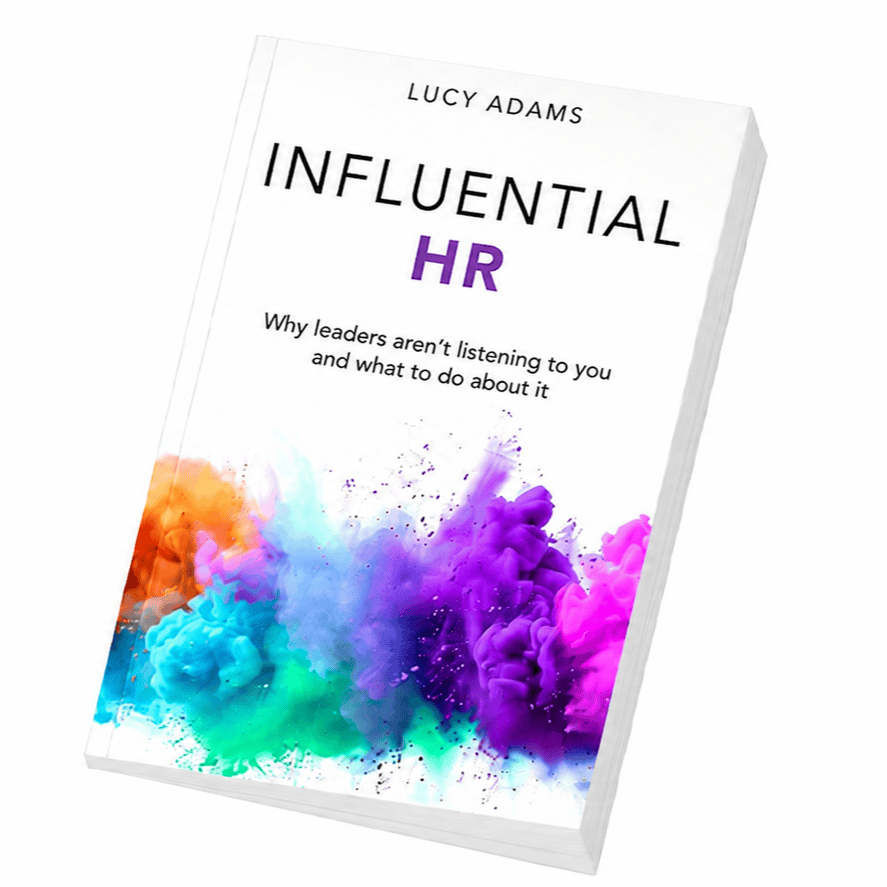
The third book in Lucy Adams’ series for forward-thinking HR professionals explores why HR struggles to influence leaders — and how to build the confidence, credibility and authority to create real change.


