

Every year many managers and employees have to go through an ordeal that costs time, money and effort but which delivers little value – actually, it’s worse than that, it decreases employees’ motivation and can occasionally make them leave the company. Yes you guessed it! It’s performance appraisal time!
It’s amazing that so many of us are unwilling to let go of a system that costs so much and yet doesn’t improve performance. Fortunately, the tide is turning and many HR teams are introducing different approaches that do actually work. In this episode, Lucy talks to Doug Dennerline, the CEO of Betterworks – a leading performance management software and author of the book ‘Make work better’ – about why traditional approaches don’t work, why we cling to the old ways when they are obviously not delivering, and what the alternatives are.
Doug offers insights from his tech industry journey, revealing how companies can evolve by adopting AI-driven tools that revolutionize goal setting and communication. We also shed light on the challenges managers face in delivering effective feedback and how technology can be an invaluable ally, acting as a coach for managerial skills.
Chapters
(00:03) Reimagining Performance Appraisals for Success
(12:24) Empowering Employees Through Goal-Setting
(18:03) Leveraging Tech for HR Transformation
Contact Doug: doug@betterworks.com
00:03 – Lucy Adams (Host)
Welcome to HR Disrupted with me, lucy Adams. Each episode will explore innovative approaches for leaders and HR professionals and challenge the status quo with inspiring but practical people strategies. So if you’re looking for fresh ideas, tips and our take on the latest HR trends, subscribe wherever you get your podcasts. So every year, managers and employees have to go through this terrible ordeal that costs time, money and effort, which delivers very little value. Actually, it’s worse than that. It can decrease employees’ motivation and can actually occasionally make them leave the company. So you know what I’m talking about. It’s performance appraisal time.
00:56
It’s amazing that so many of us are unwilling to let go of a system that costs so much and yet it doesn’t improve performance. But fortunately, the tide is turning and many HR teams are introducing different approaches that do actually work. So today we’re going to look at why those traditional approaches don’t work, why we cling on to the old ways when they’re obviously not delivering, and what the alternatives are. And with me today is a man who knows more about this topic than most, doug Dennerlein, who is the CEO of BetterWorks, leading performance management software, and author of the book Make Work Better. So for those of you watching on YouTube, I’m now showing you the book, and so a really big welcome, doug.
01:47 – Doug Dennerline (Guest)
Thank you, lucy, appreciate you having me.
01:50 – Lucy Adams (Host)
So where am I talking to you today?
01:52 – Doug Dennerline (Guest)
I live in Northern California. I’ve been a Bay Area person for 40 years now, so I’ve seen lots of transitions in technology as a tech guy.
02:01 – Lucy Adams (Host)
I can imagine. So let’s talk a bit about your background, because obviously you head up Betterworks now and we’ll talk a bit about that, but your background is very much the kind of Silicon Valley brand, you know, blue chip brand. So tell us a bit about your background and how you came to head up Betterworks. Yeah well.
02:21 – Doug Dennerline (Guest)
So I have a funny career. I spent probably 25 years of my 45 year career being in the sales organization and the networking organizations of 3Com Corporation and Cisco Systems, and at Cisco I had a team of 6,000 people. I had an HR business partner. We did all those lovely horrible traditional HR processes around annual reviews. Six months later we did comp reviews. We did a bell curve ratings with a bell curve top 15, bottom five, calibration nine, block, all those things and I used to see how horribly the effect of it was on leaders and people. And then, ultimately, my last role at Cisco.
03:05
I had a lot to do with why we acquired WebEx as a technology and I became the CEO of WebEx for three years.
03:11
And so you know, running a business over this kind of technology.
03:15
I thought we could have done that 10 years ago, but it took Eric Yuan and a pandemic to teach people that we can do it this way, but I ended up. After running WebEx, I’ve been basically CEO of SaaS companies, and the one I went to after Cisco was SuccessFactors, and so they were at the time the first kind of big company in the HCM space to be in the performance management space, to put it into the cloud and since then and when I ran a couple other companies, but I ended up here for a passion. You know what we’ve been focused on here. When I got here, this was largely BetterWorks, was an OKR company objective and key results, and by themselves it’s a bit of a tax, and so I brought all the HR stuff with me here that I feel can really change the process from being something that doesn’t work to something that actually meets the needs of today’s workforce, and so we’ll talk a little bit about BetterWorks and the product and how it helps leaders and employees do this performance thing in different ways as we go through.
04:23 – Lucy Adams (Host)
But I I kind of want to take you back to those days of of Cisco and to get a leadership perspective really on. You know, we know it feels horrible when we’re going through that rating and the end of year review and but why doesn’t it work? Why? Why doesn’t it drive performance? Because, as an HR director, that’s what I told my leaders every year You’ve got to do it because it’s going to help you improve performance and motivation. It never did. But why? Why is that?
04:53 – Doug Dennerline (Guest)
Yeah. Well, from my perspective and a lot of why I wrote the book is it’s backwards looking. It’s largely, as we all say in HR, it’s recency biased. What’s the last thing I did with this person? And that’s when I’m going to tell them about their body of work, which really isn’t about their body of work. It forces you to have a conversation because you didn’t make the top 15%, who get all the attention and all the money. That’s going to happen that year, and to me it’s like telling 75% of the company you’re just mediocre, yeah, and that doesn’t feel good to anybody. So you know. So it’s pretty obvious why it doesn’t work. You know, especially the workforce age today, they don’t want to be talked to once a year about how they did. They want to be talked to on the regular about how they’re doing and what they need to do to be successful.
05:46 – Lucy Adams (Host)
Yeah, I mean, I think this whole grading thing is just, it’s so fascinating. You know, I can remember as a as a leader myself, having conversations with my team and and I’d be you know, this would be a really good member of my team and I’d be saying, you know, you’ve had this great year and you’ve done this and I’m really happy about that, and and you’re a two, and they’d say, but I was a one last year. And then you’d get into this kind of trying to justify why they, when they’re not quite as good as they were before, even though they were having a great year and it just I just thought there’s got to be a better way. So the whole performance thing, um, I think you’re right as well about the recency bias. You know, I could only ever remember what that person had done in the last six weeks. There’s no way I could kind of sum up their entire year.
06:36
Um, and you know, we know as human beings we can only really change one behavior at a time. And yet we’re we’ve got leaders kind of saving up all this stuff and giving all this feedback in one go, usually quite clumsily, because they’re not rehearsed at doing it, they’re not experienced at doing it. So for all sorts of reasons. We know this doesn’t actually improve performance. We know performance comes through small course corrections throughout the year. We know it doesn’t motivate, as you’ve said, unless you’re getting that top rating 80%. 75% are being told they’re mediocre, so it doesn’t motivate. So why do we cling on to it? You’re talking to HR professionals who say oh well, you know our leaders want a rating system or we feel it’s important to have this once a year process. Why do we? Why do we cling on to it?
07:33 – Doug Dennerline (Guest)
Yeah, it’s, it’s a it’s. It’s pretty amazing that we do. I think a couple of reasons For one. A lot of other HR processes are tied to kind of that one rating and you know again all the things that happen behind that. So how do you disconnect that? If you go to something that you know, what we would say today is four lightweight conversations, one per quarter versus one a year. For me, lucy is is not many HR people and I don’t mean this to be as derogatory as it sounds, but it’s risky when they go wow, I’m going to change this thing I’ve been doing forever and bring this whole new process in and and people might not like it, and it’s, I’m going to risk my job, you know.
08:19 – Lucy Adams (Host)
I was fascinated in your book and I’m going to do another plug. Make work better is that you talk about its origins being after the. Is it the Second World War or the First World War?
08:31 – Doug Dennerline (Guest)
It was the US Army 100 years ago. I mean, it’s really been around for 100 years.
08:36 – Lucy Adams (Host)
Yeah, so the 1920s.
08:38 – Doug Dennerline (Guest)
It was made popular by Jack Welch in the 70s and we’ve all been stuck with it ever since.
08:46 – Lucy Adams (Host)
I agree with you, I think HR professionals, they are asking different things of leaders, aren’t they? They’re asking leaders to move away from the safety blanket of a form security blanket you know the safety net of a form. There they, you know a process that they may hate but they understand and instead move to a more open ended career conversation. I also agree with you that what I see a lot of HR people saying but how will we pay bonuses, how will we pay paying increases, if we haven’t got that number to to connect it to, how will we do that? And, of course, you and I know that there are definitely ways to do it, uh, which are absolutely fine, but it makes people anxious about about releasing this kind of the security of having a form, a process and a number that comes out the other end as end, as if this number has validity and science behind it, when we know it doesn’t. So let’s refocus and talk about what does a better approach look like? And some of it’s in the language I think you talk about.
10:01
I think, performance enablement, performance empowerment as opposed to performance management, and I couldn’t agree more that actually the idea that I’m going to have someone manage my performance is just not feasible actually. It’s so determined by me as an individual, isn’t it? But, tell us about, from your perspective, the kind of the elements that make up a different approach, the one that works?
10:30 – Doug Dennerline (Guest)
Yeah, so I’ll walk you through it. And we’ve seen this with many of our customers and we see the impact it has on people. So the first thing we do in our product is we want you as a collective company and this is really important at the highest level is to set your goals each quarter, that you want to make sure that everybody in the organization understands what the company is trying to accomplish, and most companies do this once a year. It’s a big effort. Lots of work goes into it. They talk about it, they do a big presentation. Then it goes in a drawer. At the end of the year they look back and go did we do it?
11:06
Well, we like it to think that you want to, especially in today’s speedy markets, and look what’s going on today. You might have to alter your goals all along the way to meet market conditions, to alter your goals all along the way to meet market conditions. So the first thing is setting goals so that everyone in the organization can now look up. A manager can sit with their individual contributors. They can say, okay, this is what the company is trying to accomplish. What are you and I going to do to help the company achieve its goals and then, more importantly, I want to help you become who you want to be as a person in this company, and so let’s work on how do we develop you into that person.
11:39 – Lucy Adams (Host)
And let’s just unpick that a little bit. So this kind of regular refreshing of goals, and I think quite often and this is going to be a theme in this podcast that you move from big annual set piece to something that’s much more fluid and done regularly and agile. And I think sometimes again, when HR is talking to managers about a new approach that is more frequent, more agile, more fluid, they think that it’s the same set piece that they were doing annually, but now they’ve got to do it quarterly or monthly, and that’s not what we’re talking about here is it?
12:13 – Doug Dennerline (Guest)
It’s not, it’s not. I mean, it’s all about lightweight and it’s all about time it takes to do the process. So what the other thing we’ve done with our? We have a goal application and then we have what we call conversation capability, where what you’re doing is you’re getting into our application and you’re asking two or three questions that are developed by my team working with your team in HR. So it represents your culture about a couple of questions. You know what were your goals? Were you able to achieve them? Did you hit any roadblocks? How can I help you as a manager?
12:49
And then we use AI to help you actually write it and to make sure that it removes bias. If there’s bias in the way that you’re communicating with somebody, it makes it actionable, professional, and then it also shows the manager if we did recommend changing the wording, why we changed it. Yeah, and educating them along the way. And then we have most people have a mid-quarter check-in. So basically, lucy, it’s creating a conversation between manager, employee on an ongoing basis. So our average user is in our product once a week. So they’re either updating a goal, there’s a manager commenting on hey, nice progress against that goal, good work, you know it’s creating an ongoing conversation. And then there’s the capability to do feedback. We have a one-on-one capability so that you can touch base every week on kind of, what are the tactical things you’re going to work on this week to make sure we’re making progress?
13:42 – Lucy Adams (Host)
And the other thing that’s great for managers you can see that what’s most important for you to get done that quarter, that progress is being made there and if it’s not, you can jump in and help somebody work through that know you and I have spoken about this as well is and it’s something that I believe very firmly is that the more that we can make employees responsible for the design, creation, recording of their own goals, the more inclined they’ll be to push forward to try and achieve them, rather than than having them kind of cascaded down through the organization. And you talked earlier about the fact that you know we’ve got perhaps too many goals or they’re too set in stone and they’re not reviewed regularly enough, but there’s also this awful cascade that goes on, isn’t there?
14:33
So, just talk to me a little bit about your perspective on how employees could set their own goals that’s right and that’s a really important point you’re making.
14:43 – Doug Dennerline (Guest)
lucy, thanks for bringing it up it. A lot of companies when they do that annual thing, then they just shove those goals down deeply in the organization, and when you’re three layers or four layers down, they mean literally nothing to you. Yeah, right, and so what? What’s important is that you have conversations at every level with the people that manage manager or managers, manager or contributors is based upon those goals. What are your personal goals? What are we going to do together to make sure that we’re doing moving not only you forward but the company forward? And you know, there’s a statistic at Gallup says 78% of people in a company greater than a thousand people don’t really understand how their work helps our company achieve its goals, and so you’ll see a really big increase in engagement scores when you use a product like ours, because now you go hey look, I know my work is moving things forward and I understand what the company’s trying to accomplish too.
15:33 – Lucy Adams (Host)
Yeah, yeah, I mean we talk a lot about well-being and engagement and yet that that I’m doing meaningful work, that is contributing, is right up there. You know we can kind of drop a lot of the Zoom yoga and the Fitbits and the free, you know granola bars and actually refocus our attention much more on this. You know how do we ensure that people know what they’re doing contributes and have some autonomy and some control over the design of that, rather than it being cascaded? You know, we we used to bang on, didn’t we, about having the line of sight. You know, and then you’d find this something ridiculous, like you know some poor receptionist who’s got a line of sight through to the to the board goals and it was just making no sense to him or her.
16:24
So kind of features for you are around this kind of frequency of goal setting, light touch, this sense of kind of looking forward, employees owning and creating their own goals and having regular conversations around that, and the line manager being much more adept at having better conversations. Now, of course, that last piece line managers being better at having conversations and asking questions it’s probably been on HR’s agenda for you know, since their HR teams existed. Yeah, why do you think managers find it hard? Is it lack of skill? Is it lack of interest? Is it lack of experience? Why, what is it that line managers find hard?
17:13 – Doug Dennerline (Guest)
Maybe a little bit of all those things, lucy, but when you only do this or required to do this once a year, you certainly aren’t an expert at it. When you do it all the time, you know it becomes. It’s forcing a relationship that I don’t think manager and individual contributor normally have. I mean, they’re speaking on a regular basis. I think the other thing is it the individual says, hey, my manager actually understands the work that I’m doing. You know they’re agreeing with me on what I’m going to accomplish this quarter and so they care about me, they’re helping me develop, and so it creates a sense of trust that you don’t get when you look back once a year and say how’d you do? And it’s kind of.
17:51
You know, usually it’s more about the negative than the positive and most managers aren’t brave enough to give difficult feedback to someone. I do think that it’s and my company. I’ll admit it I’m kind of an AI person. I’ve been really focused on AI in my product and in my company. It can really help with the language that you give feedback to someone. You know, I went into ChatGPT and I said I have an employee I have to give some difficult feedback to. Can you help me understand how to do that, and it spit out in 30 seconds a 10 point plan on how to have a difficult conversation with somebody.
18:26 – Lucy Adams (Host)
That’s really interesting, isn’t it? And I think you know we’ve seen in HR AI being used to take over some of the transactional piece. But actually helping with human relationships is not something we’ve necessarily known it for, but I would absolutely agree with you there. Necessarily known it for, but I would absolutely agree with you there. I think that reframing, rephrasing, thinking through the implications of the way that you phrase things, ai can absolutely help with that, as long as you’ve got the right prompts. Let’s talk a bit more about tech and the role that it can play in help making the change.
19:03
I mean, you you mentioned that you worked for SuccessFactors and you were very senior in SuccessFactors and and I’ve kind of always had some slight problems with the big enterprise systems and the and the big HR systems, because I felt that they hardwired in many of the traditional processes that weren’t working. So I would say to HR directors you know, whatever you do, don’t buy the performance and talent package. You know, don’t, don’t do it. No, I am sure it’s a. It’s a long time since I’ve familiarized myself with the, with the big players, but I’m sure they’re all doing amazing things. What role can technology? Not just your product, but what role can technology play, not in just automating old processes, but genuinely helping to change behavior, particularly from line managers?
20:28 – Doug Dennerline (Guest)
Yeah, it’s really important that you don’t. Tech is important I’ll talk about answering your question in a second but it’s got to be. You want it to be implemented and keeps people on track, otherwise it’s. You know, again, you’re depending on HR reaching out saying, hey, you need to do this, chasing people down, being the police you know, with us there’s notification engines and it says, hey, it’s time for this. You should take some time to do that. You should reach out to your person and they haven’t updated a goal in a while. So reach out and find out, you know, if they’re having a difficulty. So it’s an assistant to the change management process, but what you have to first design is the change management process.
21:00 – Lucy Adams (Host)
Yeah, can you elaborate on that?
21:05 – Doug Dennerline (Guest)
Yeah, I mean going again we’ve talked about it to teach people that they want to be going through a regular interaction with folks, not once a year, the quarterly conversation. We display for you all their goals, how they did against their goals, the feedback they’ve received, the recognition they’ve gotten in the company, how they progressed on their one-on-ones. It shows you their body of work. As you are now giving them feedback, you don’t have to use your memory, you can just say well, okay, they did this on their goals, they did a nice job here, they got some great feedback and it helps form what feedback you want to give to somebody, and so we always keep all that data in informed.
21:53
So we have a calibration product and a nine box product and it can help inform you where people belong in that at the end of the year because, candidly, lucy, many people, even in our product, still want an end of year thing. And so what we do is we create an outline of their body of work for the year and says here’s what you told them, their strengths and their weaknesses were. So we just display it for you and, kind of help, you write literally the review for you, based upon the body of work and the feedback they’ve gotten.
22:19 – Lucy Adams (Host)
It’s interesting, isn’t it? I think, even with the better conversations that are being facilitated, there is still a tendency to want to cling to that. Give me a mark, you know. Give me a, give me a grade, that that kind of very almost you know end of school report approach. I think the, for me, the technology, you know, is if it’s about forming new habits, if it’s supporting that, if it’s about helping build new skills, I think it can be incredibly supportive. In that you mentioned the kind of AI coach for managers.
22:52
I think that’s really exciting and an element that wasn’t available, you know, even a year ago, really two years ago, certainly, and so that is just coming on leaps and bounds, and I think this kind of interactive learning, learning the manager’s style, learning their language, learning what matters to them and then giving them some prompts for how they might frame the feedback in slightly different ways, I think is the answer, without really thinking through the education piece, the engagement piece, that involving people and truly understanding why the traditional approaches haven’t worked and what does work, um, I think then then that can be more problematic, but there’s some amazing products, including yours, out there. Um, can we talk a little bit about, before we wrap things up, about HR’s role in making change happen? What do you know? If you’re advising HR teams around wanting to make the change away from a very traditional approach? What are the kind of the things that you’ve seen been most successful?
24:02 – Doug Dennerline (Guest)
Yeah, that’s what the book is really all about, lucy. You know, when I was at Cisco and I had 6000 people, I also had a very good relationship with the CHRO of Cisco for the 12 years I was there, and so whenever they hired a new HR business partner, they gave them to me. And you know, me and my 6000 folks, we would, we would work together and figure that out, and then they go off to some other function and I saw great ones and I saw not so great ones, and what was a great one to me was somebody that wasn’t my coach, but I call them mobilizers. They have an opinion, they understand the business, they understand what the business is trying to accomplish. They understand the business. They understand what the business is trying to accomplish.
24:47
They’re a mirror for you as a CEO, saying you know, if this is where we want to get in five years, these two members of your team don’t have the skills to get you there and you need to do something about it.
24:56
Yes, you’re friends, but you know what. It’s time to make a change, and I always appreciated that level of support and holding that mirror into my face. And so, you know, I encourage HR people to not be tactical, not be the person that you know only works on making sure people don’t get sued and they do the processes. But to have a good CHRO next to a good CEO that understands people are the most important asset in today’s world. That, in the impact that can have when you have that strong relationship, can change the culture of a company pretty dramatically. And so I love finding HR men and women who are those mobilizers. They’re like I’m going to help my company succeed and I’m going to do the things I need to do and I’m going to hold everybody responsible and they’re not going to get away with, you know, just making trying to make me not have a seat at the table.
25:50 – Lucy Adams (Host)
Yeah, absolutely.
25:51
I mean, I was recording something.
25:51
I can’t remember what it was for now, but it was talking about, you know, when is it an HR’s job and when is it the manager’s job, and I think it, for me it comes down to, you know, and when it’s HR’s job to create the conditions where people can perform and grow and it’s the manager’s job to make sure they do perform and grow, you know it’s not about HR having the conversations for the manager on their behalf, you know, doing the stuff that they want to avoid.
26:17
It’s not about providing tons of process that doesn’t work. It’s about really finding those things that’s going to unlock that manager’s ability to make sure they do perform. And that takes, you know, takes great insight. It takes I’m not saying we all have to be psychologists, but I think it helps if they understand the way that you know different people tick and what’s going to work in this situation. You know, I think, when we look at rolling out a change program, whether it be performance management or anything else, just having one business case which you then kind of assume that everybody’s going to move at the same pace isn’t like that, is it?
26:54
No it’s not. You know, I think that kind of ability to know where, who are your early adopters and when to push hard here and when to back off a little bit because they’re just not ready. You know, I think that’s that for me. Me, those are the really great business partners that I’ve worked with.
27:10 – Doug Dennerline (Guest)
I think the other really important relationship Lucy is is the leadership, so the leadership of the company. You know you need a CEO that gets it too, because they can. You know, I’ve seen a lot of HR people that would love to do things a little differently, and they just don’t have support from above. And so for me, one of the chapters in the book is you know what to look for in a CEO and what to look at. What does a CEO need to look for in a CHRO? And don’t work for somebody that’s just going to be no, we don’t want to do that. No, we don’t want to do that. No, we don’t want to do that absolutely.
27:40 – Lucy Adams (Host)
I couldn’t agree more. You know, if I’m ever talking to an HR director or business partner who’s getting stuff done, who’s enjoying their work, who’s feeling like they’ve got credibility and influence, that’s you know, experimenting and innovating and you ask them. You know, tell me about your role, tell me about where you were, and they will always talk about the fact that they have a great relationship with the leader. If they don’t, and the leader doesn’t get it, it just makes every day a grind, doesn’t it?
28:11
They don’t always have to be you know, understand what you’re trying to do. But I think having some faith that actually investing in your people doing things differently is a good thing just goes a long way, doesn’t?
28:23 – Doug Dennerline (Guest)
it and I would say it’s a really interesting time, lucy, I think profoundly, artificial intelligence is going to change the role of hr in a profound way, in a very good way. In all the things that we talked about, we think about it as a co-pilot, not the pilot, but you know, we just did did a research report that we do each year, and this one this year was around AI and the use of AI and the impact it has on companies, and 58% of people in a company, whether they’re AI, forward or not forward, are using ChatGPT to do performance reviews. And you know that’s a little risky because now you’re using personal information, putting it in a that’s really interesting and a little scary, isn’t it?
29:08
It is a little scary. So one of the things about our AI is private, you know, and it’s basically using HR language and so we don’t even train it. We use it to fine tune, but, again, it’s a much safer way to do this and people need to embrace it and I would encourage HR people to really embrace it. You know, and the kinds of things we talked about. You use it as a bot, ask it questions and it’s very insightful in terms of what it can do, and we’re going to continue to innovate in our product to make it something that totally differentiates and again, gives relevant feedback that actually means something to somebody and can give difficult feedback in a very professional way. That may be difficult for you to do on your own.
29:51 – Lucy Adams (Host)
Doug, that’s been really, really interesting. Where can people who are listening to this find you and find out more about BetterWorks? What’s the best route?
30:00 – Doug Dennerline (Guest)
Please, please, please to reach out to me. My email is very easy it’s Doug at betterworkscom. And I’ll happily respond to anybody that sends me an email.
30:09 – Lucy Adams (Host)
That’s great, and we’ll make sure we put that email into the show notes as well. Great. Thank you so much for joining me today on this episode, doug, and it’s been a real pleasure getting to know you a little bit over recent weeks, and thank you for making the time.
30:24 – Doug Dennerline (Guest)
You as well, lucy, much appreciated.
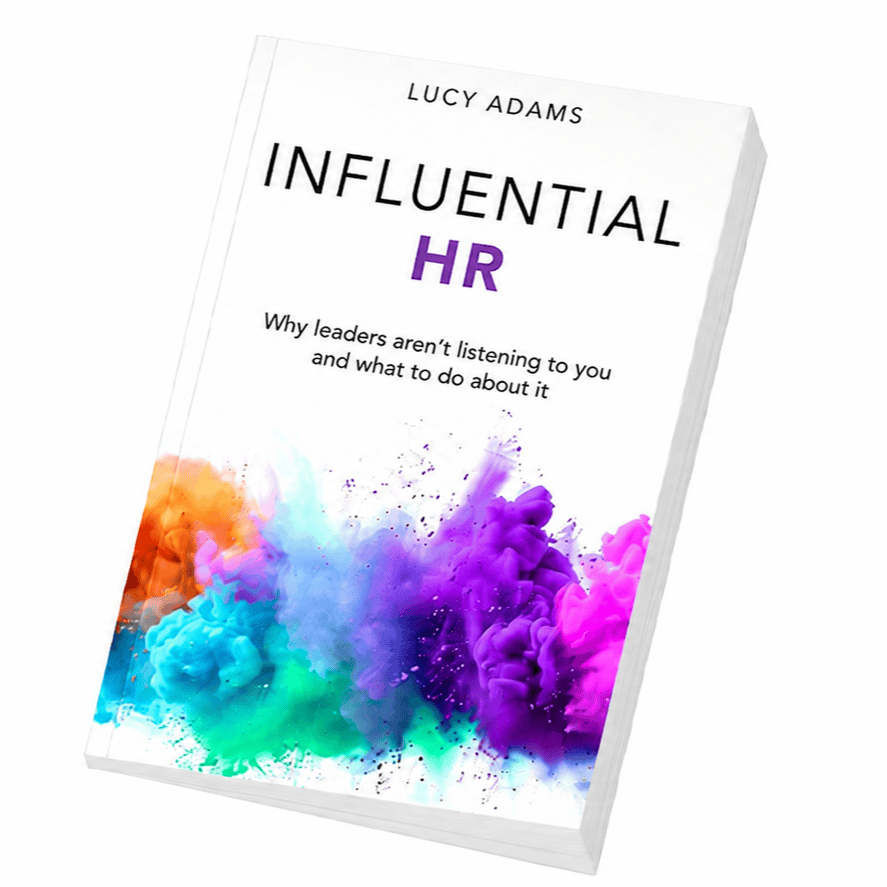
The third book in Lucy Adams’ series for forward-thinking HR professionals explores why HR struggles to influence leaders — and how to build the confidence, credibility and authority to create real change.


